In the 2026/27 season, Sung Min Song once again appears on major opera and concert stages, taking on a diverse range of roles and repertoire. He opens the season at Oper Leipzig as Alfredo in Verdi’s "La traviata", followed by engagements at the Nationaltheater Mannheim, where he performs as Leicester in Donizetti’s "Maria Stuarda" and appears in "Nabucco", Beethoven’s Ninth Symphony and Puccini’s "La bohème". A particular highlight of the season takes him to Valencia, where he portrays Mao Zedong in John Adams’ "Nixon in China", alongside Thomas Hampson and Marlis Petersen. He subsequently makes his debut at La Monnaie / De Munt in Brussels as Edgardo in Donizetti’s "Lucia di Lammermoor". His concert engagements likewise span an extensive repertoire, including Verdi’s "Messa da Requiem" in Stendal, Trier and Leipzig, as well as in Göttingen, Hanover and at Hamburg’s Laeiszhalle in summer 2027. Further highlights include Haydn’s "The Creation" in Wiesbaden, Rossini’s "Stabat Mater" in Aachen and several performances of Beethoven’s Ninth Symphony with the Munich Symphony Orchestra. The season once again demonstrates Sung Min Song’s versatility as an opera and concert tenor, taking him from Leipzig and Mannheim to Valencia and Brussels and encompassing repertoire ranging from bel canto and Italian opera to major symphonic and sacred works.
In previous seasons, Sung Min Song has appeared on numerous major opera and concert stages. He made his debut as Erik in Wagner's “Der fliegende Holländer” at the Komische Oper Berlin and has performed in other opera roles, including Camille in “The Merry Widow” at the Hessian State Theater in Wiesbaden, Alfredo in “La Traviata” at the Theater Osnabrück, Lensky in “Eugene Onegin” and Tom in “The Rake's Progress” at the State Theater in Augsburg, and Nadir in “Les pêcheurs de perles” in Göttingen. Engagements also took him to the Saarländisches Staatstheater as Ernesto (“Don Pasquale”) and Alfred (‘Fledermaus’), to the Theater Magdeburg as Pong in “Turandot,” and once again to the Staatstheater Darmstadt as Alfredo. In the concert field, he has performed in Verdi's Requiem at the Elbphilharmonie Hamburg, the Bremer Konzerthaus, the Alte Oper Frankfurt, and at the Star & Rising Stars Festival with Vladimir Jurowski. He has sung Beethoven's Ninth Symphony with numerous orchestras, including the Munich Symphony Orchestra, the Hof Symphony Orchestra, the Aachen Symphony Orchestra, and the National Forum of Music in Wroclaw. Other highlights include an Asian tour with Mozart's sacred music together with Les Musiciens du Louvre under Marc Minkowski, CD recordings for NAXOS, Carmina Burana at the Isarphilharmonie and the Vienna Musikverein, and sacred works by Puccini and Dvořák with renowned orchestras and conductors.
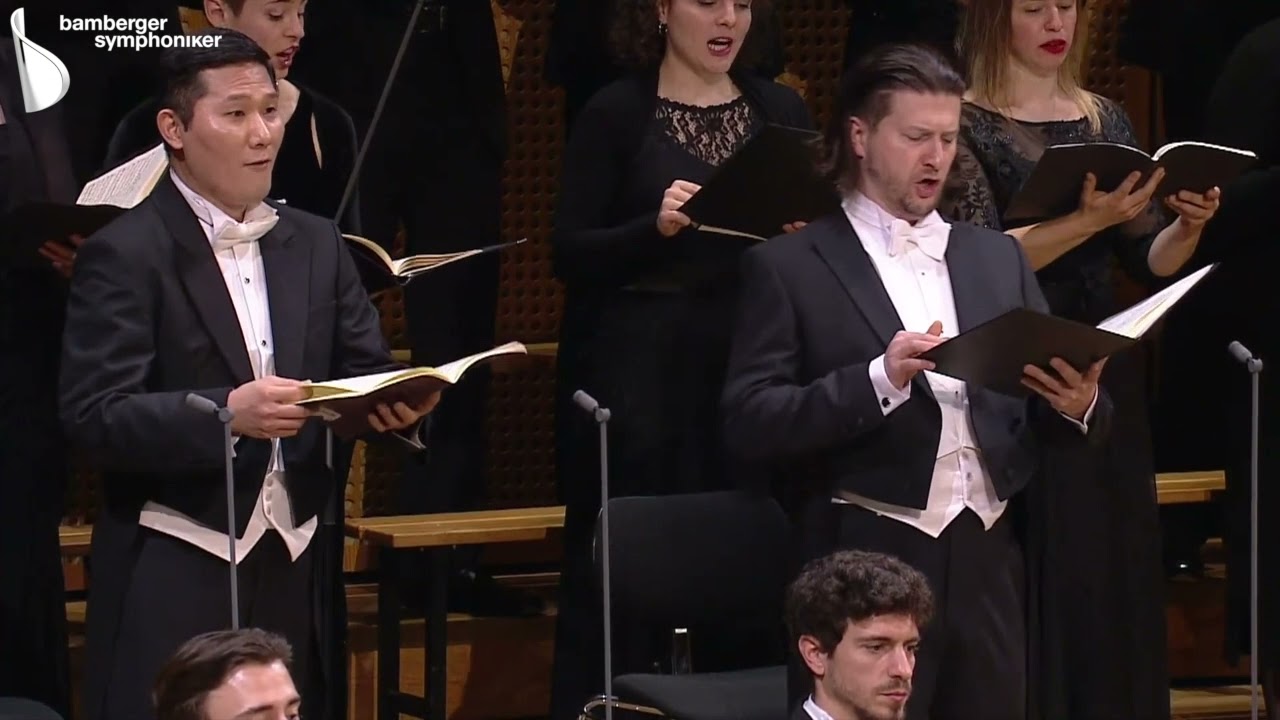
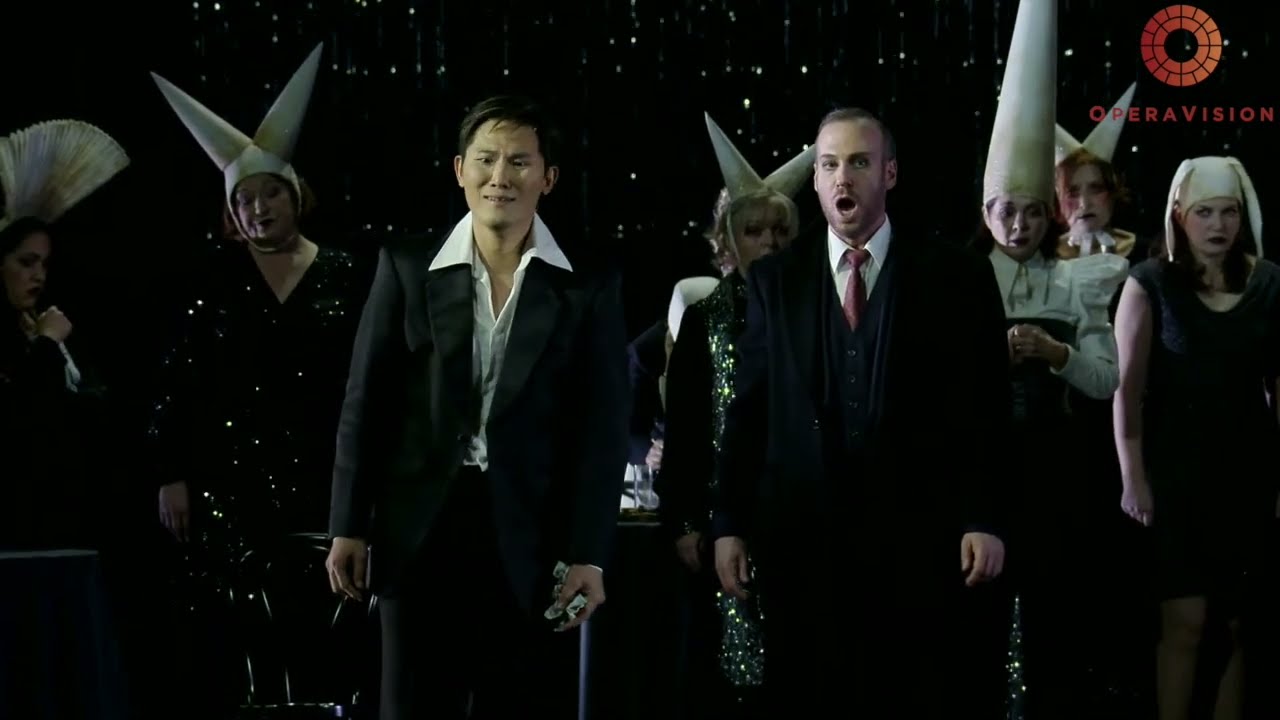
In previous years, Sung Min Song has already been heard in central roles in his field: as the Prince in Dvořák's “Rusalka” (directed by Barrie Kosky) in Berlin, Arnold in Rossini's “Guillaume Tell” (Bühnen Bern), Faust in Gounod's opera of the same name (Aalto Theater Essen), Ernesto (“Don Pasquale”) and Alfred (“Fledermaus”) at the Saarländisches Staatstheater. In the concert field, he has appeared at the “Star & Rising Stars Festival” with Vladimir Jurowski, in “Carmina Burana” at the Vienna Musikverein, in Puccini's “Messa di Gloria” (CD production with the Bachakademie Stuttgart) and Dvořák's “Stabat Mater” in Hamburg. He has also performed in works such as Bach's “St. John Passion” (Evangelist) in Vienna and Warsaw, Mendelssohn's “Lobgesang” with the Gürzenich Orchestra Cologne, Strauss' “Ariadne auf Naxos” (Brighella), Beethoven's 9th Symphony, and Verdi's “Requiem” with renowned orchestras such as the Bamberg Symphony Orchestra. Earlier highlights included his acclaimed Arnold in Rossini's “Guillaume Tell” (Arte recording), Strauss' ‘Feuersnot’ (CD production with the Munich Radio Orchestra), Puccini's “Messa di Gloria” at the Leipzig Gewandhaus, and concerts under Kent Nagano and Alain Altinoglu.
Sung Min Song comes from South Korea and was born into a family of architects and engineers. After completing his studies in computer engineering in his home country, he discovered his vocal talent thanks to a singing professor in a church. Shortly thereafter, he decided to put all his eggs in one basket, moved to Germany, and studied singing at the University of Music and Performing Arts Munich with Prof. Frieder Lang and Prof. Daniel Kotlinski, where he successfully completed his studies.
He is a multiple award winner at international competitions, including the Osaka International Music Competition, the Anneliese Rothenberger Competition, the Richard Strauss Competition, the Music Prize of the Kulturkreis Gasteig, the Luitpold Prize of the Kissinger Sommer, and the Grand Prix and Prix spécial ADAMI at the Concours International de Belcanto Vincenzo Bellini in Paris.
- Photo: Sung Min Song
- Photo: Sung Min Song